A person types on a laptop. Next to them, text reads: “What Deserves Your Attention First in Business? A Simple Framework for Overwhelmed Entrepreneurs.” An illustrated woman in sunglasses stands to the right, highlighting key business priorities.

What Deserves Your Attention First in Business? A Simple Framework for Overwhelmed Entrepreneurs

There comes a point in every business where everything feels urgent.

You need more visibility.
You want more revenue.
You should update your website.
You meant to email your list.
You have ideas you haven’t launched yet.

And somehow… it all feels equally important.

The problem isn’t laziness.
It isn’t lack of ambition.
It’s lack of filtering.

When everything feels important, your energy becomes scattered. And scattered energy rarely produces sustainable growth.

If you’re wondering what deserves your attention first in your small business — especially when time and capacity are limited — this framework will help.

Before we talk about prioritization, we need to address why urgency creeps in so quickly.

Modern entrepreneurship is reactive by default.

You open social media and see:

  • Someone launching something new.

  • Another creator posting daily.

  • A competitor redesigning their website.

  • A coach promising six-figure months.

Comparison creates pressure.
Pressure creates urgency.
Urgency creates distraction.

Add revenue pressure, client demands, and creative ideas — and suddenly you’re juggling 14 “important” things with no sequencing.

This is where burnout begins.

Not because you’re doing too much.

But because you’re doing too much at once — without hierarchy.


"Visibility creates opportunities. The more people see your brand, the more chances you have to make an impact."
Jay Baer
Global Business Strategist

The Visibility–Relationship–Revenue Filter

 When everything feels important, use this simple question:

Does this activity directly support:

  1. Visibility

  2. Relationship

  3. Revenue

If it does not support one of those three pillars, it likely doesn’t deserve priority right now.

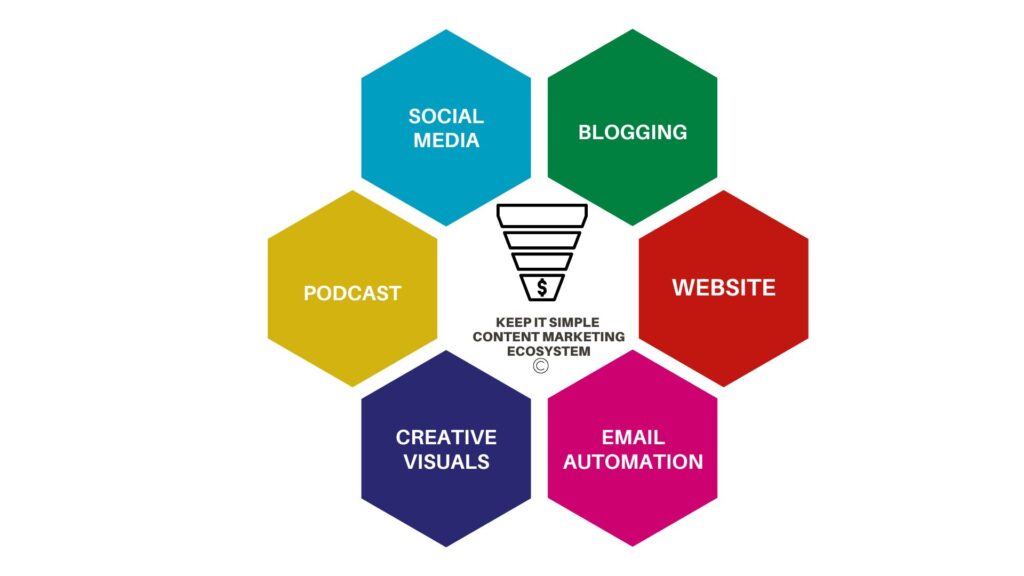
This filter aligns directly with my Content Marketing Ecosystem — because sustainable growth requires these elements working together.

Let’s break this down clearly.


1. Visibility: Can People Find You?

Visibility is about discoverability.

If people cannot find you, nothing else matters.

Visibility includes:

  • SEO-optimized blog content

  • Strategic social posts

  • Podcast guesting

  • Collaborations

  • Search-friendly website structure

Example: Creative Entrepreneur (Photographer)

A photographer might think:
“I need a new logo.”

But what would serve visibility better?

  • Writing a blog post titled: “How to Choose a Wedding Photographer in Atlanta”

  • Optimizing portfolio pages for local search

  • Sharing behind-the-scenes content on Instagram

One builds visibility. One decorates the brand.

Example: Etsy Shop Owner (Digital Products)

An Etsy seller might think:
“I need to create 10 new products.”

But visibility might actually require:

  • Optimizing existing listings for keywords

  • Creating Pinterest pins that link back to product pages

  • Writing blog content that answers search questions

Visibility is not volume.
It’s strategic discoverability.


2. Relationship: Do People Trust You?

Once someone finds you, trust must be built.

Relationship includes:

  • Email marketing

  • Consistent messaging

  • Storytelling

  • Thought leadership

  • Nurturing content

Example: Coach or Consultant

A coach might think:
“I need to create a new offer.”

But if their email list hasn’t heard from them in months, relationship is the priority.

Sending:

  • A value-driven email

  • A reflective insight

  • A helpful resource

builds trust — and trust builds conversion.

Example: Wellness Practitioner (Massage Therapist / Esthetician)

A spa owner might focus on:
“Posting daily specials.”

But relationship may be better built through:

  • A monthly educational email

  • Client success stories

  • Aftercare guides

  • Community partnerships

Relationship reduces sales pressure.

When trust is strong, selling feels natural.

3. Revenue: Is This Monetization-Connected?

Revenue is the result of aligned visibility + relationship.

Revenue-focused activities include:

  • Refining your core offer

  • Improving your sales page

  • Creating a simple entry offer

  • Building a low-ticket offer that feeds higher tiers

  • Launching strategically (not constantly)

Example: Creative Freelancer (Graphic Designer)

A designer may believe:
“I need to post more on Instagram.”

But revenue might actually come from:

  • Packaging services clearly

  • Adding a booking link

  • Creating a ‘starter’ brand kit offer

  • Following up with past clients

Revenue requires clarity, not constant promotion.


The Real Problem: Poor Sequencing

Most burnout doesn’t come from working hard.

It comes from working in the wrong order.

Examples of poor sequencing:

  • Posting daily without a clear offer.

  • Launching new offers without nurturing your list.

  • Redesigning a website before clarifying your message.

  • Creating content without search strategy.

This creates activity — not traction.

The correct sequence often looks like this:

Visibility → Relationship → Revenue.

Not perfectly.
Not rigidly.
But intentionally.

How This Connects to a Content Marketing Ecosystem

 In my Content Marketing Ecosystem, each piece supports the others.

For example:

  • A blog post builds visibility (SEO).

  • That blog becomes an email.

  • That email strengthens relationship.

  • That relationship supports revenue.

  • That revenue allows reinvestment into visibility.

Nothing exists in isolation.

An ecosystem compounds effort.
A checklist drains it.


A Practical Exercise: Choosing Your Focus This Month

Instead of asking:

“What should I work on next?”

Ask:

Which pillar is weakest right now?

  • If traffic is low → focus on Visibility.

  • If engagement is low → focus on Relationship.

  • If sales are low but traffic is strong → focus on Revenue.

Choose ONE pillar for 30 days.

Not all three.

This reduces overwhelm immediately.


Common Priority Mistakes Small Business Owners Make

 Let’s normalize a few patterns:

Mistake 1: Branding Before Clarity

Designing logos before clarifying offers.

Mistake 2: Posting Without Purpose

High volume, low direction.

Mistake 3: Launching Without Nurturing

Selling to a cold audience.

Mistake 4: Creating New Before Optimizing Existing

New ideas feel exciting.
Optimization builds income.

A Calmer Way to Grow

Simplicity isn’t about doing less.

It’s about doing what matters most — first.

When everything feels important, clarity is the strategy.

If you enjoy exploring these concepts in a more conversational way, I share deeper reflections inside my private podcast, Private Pocket Coaching — a quiet space for business owners building intentionally.

You don’t need to chase everything.

You need to sequence wisely.

Copy of Dr Yam Signature

FAQ: Prioritizing in Small Business

How do I prioritize tasks in my small business?

Use the Visibility–Relationship–Revenue filter and focus on the weakest pillar first.

What should a new business focus on first?

Visibility. You must be discoverable before you can nurture or convert.

How often should I create content?

Consistency matters more than frequency. Create content that connects within your ecosystem.

Is blogging still worth it in 2026?

Yes — especially for search visibility and long-term traffic stability.

Add A Comment

This site uses Akismet to reduce spam. Learn how your comment data is processed.